


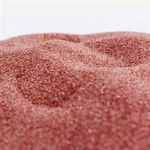

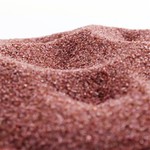


Rutile Sand
JIANGSU LM MINING CO., LTD. was incorporated in Lianyungang city, Jiangsu Province, China since 2007. It is a mining and production company responsible for natural mineral "Garnet" . Our exporting products include Rock Garnet Abrasive, Alluvial Sea/Alluvial Garnet Abrasive, Blasting Garnet Abrasive, Waterjet Cutting Garnet, Water Filtration Garnet, Polishing Garnet and Wear-resistant Flooring Garnet. Waterjet cutting garnet is a mineral used, thanks to its characteristics, in many cleaning and sandblasting processes. Chemically inert, free of toxic substances, it is not radioactive nor carcinogenic and it is extremely resistant.


Why Choose Us?
Company Strength
We own 3 mines with a total reserve of 6 million tons of almandine ore. Our annual sales volume is 30,000 tons.
Production Market
Our ore is sold to more than 30 countries, including the United States, Canada, South Korea, Indonesia, the Middle East, Singapore, etc.
Quality Assurance
High quality is always our priority to satisfy customer's need. The finishing product meet the standard based on ISO11126 and ISO11127.
Exquisite Craftsmanship
As a specialist for garnet abrasive, we apply the gravity and magnetic concentration principle for processing by purifying, drying, steps of gravity and magnetic choosing.
Types of Rutile Sand
Natrual Rutile
Natural rutile is the most common and naturally occurring form of titanium dioxide (TiO2). It is commercially important as a source of titanium dioxide, which is used in various applications like paints, pigments, and some alloys.
Artifcial Rutile
Artificial rutile, also known as synthetic rutile, is a high-purity form of titanium dioxide (TiO₂) produced by processing ilmenite ore, a titanium-iron mineral. Synthetic rutile is a crucial feedstock for various industries, including titanium dioxide pigment production, titanium metal production, and welding electrode coverings.

Specifications of Rutile Sand

Physical Properties of Rutile Sand
|
Mohs scale hardness |
6.0–6.5 |
|
Luster |
Adamantine to metallic |
|
Streak |
Bright red to dark red |
|
Diaphaneity |
Opaque, transparent in thin fragments |
Processing and Production of Rutile Sand
Mining and Extraction Techniques
Rutile is typically mined using beach sand mining methods, where the mineral is separated from other sand components. Advanced techniques such as hydraulic mining and dry mining are utilized to maximize yield and minimize environmental impact.
Refinement and Purification Processes
After extraction, rutile sand undergoes refining processes to remove impurities. Techniques include gravity separation, magnetic separation, and chemical treatments, all aimed at enhancing the quality of the final product for specific applications.
Usage of Rutile Sand
Titanium Dioxide Production: Rutile is a significant source of titanium dioxide, a white pigment widely used in various industries. TiO2 is a key ingredient in the production of paints, coatings, plastics, paper, and textiles, providing opacity, brightness, and UV protection to these materials.
Ceramics and Glass: Rutile is utilized as a glaze in the ceramics industry to enhance the appearance and resistance to heat and wear of pottery and porcelain. It imparts a glossy, transparent finish and can also be used as a flux in the production of glass, helping to lower the melting point and improve clarity.
Electrodes in Welding: Rutile electrodes are commonly used in welding applications. They are known for their stability and ease of use, making them suitable for both professional welders and hobbyists. Rutile electrodes create strong welds with good appearance.
Aerospace and Defense: In the aerospace and defense industries, rutile is used as a reinforcing agent in the production of high-strength, lightweight titanium alloys. These alloys find applications in aircraft and other critical components due to their excellent strength-to-weight ratio and high-temperature resistance.
Jewelry and Gemstones: Rutile crystals, especially those with attractive needle-like formations, are prized by collectors and jewelers. They are sometimes used as ornament stones or gemstones, incorporated into jewelry for their unique appearance.
Personal Care Products: Rutile is also used in cosmetics and personal care products, particularly in makeup products and sunscreens, protecting the skin from the harmful effects of ultraviolet radiation.
Certificate

Packaging

Transportation
