


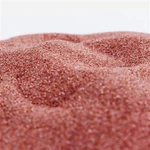

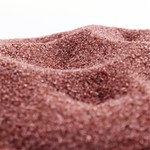


Zircon Sand/Powder
JIANGSU LM MINING CO., LTD. was incorporated in Lianyungang city, Jiangsu Province, China since 2007. It is a mining and production company responsible for natural mineral "Garnet" . Our exporting products include Rock Garnet Abrasive, Alluvial Sea/Alluvial Garnet Abrasive, Blasting Garnet Abrasive, Waterjet Cutting Garnet, Water Filtration Garnet, Polishing Garnet and Wear-resistant Flooring Garnet. Waterjet cutting garnet is a mineral used, thanks to its characteristics, in many cleaning and sandblasting processes. Chemically inert, free of toxic substances, it is not radioactive nor carcinogenic and it is extremely resistant.


Why Choose Us?
Company Strength
We own 3 mines with a total reserve of 6 million tons of almandine ore. Our annual sales volume is 30,000 tons.
Production Market
Our ore is sold to more than 30 countries, including the United States, Canada, South Korea, Indonesia, the Middle East, Singapore, etc.
Quality Assurance
High quality is always our priority to satisfy customer's need. The finishing product meet the standard based on ISO11126 and ISO11127.
Exquisite Craftsmanship
As a specialist for garnet abrasive, we apply the gravity and magnetic concentration principle for processing by purifying, drying, steps of gravity and magnetic choosing.
Types of Zircon Sand/Powder

Zircon Sand
Zircon sand is a naturally occurring mineral, primarily composed of zirconium silicate, and is a key raw material for various industrial applications. It's found in heavy mineral sand deposits, often as a co-product of titanium mining, and is used in ceramics, castings, refractories, and other high-temperature applications.

Zircon Powder
Zircon powder is a fine, highly reactive powder primarily composed of zirconia (zirconium dioxide, ZrO2). It's a versatile material with various applications, including being used as an opacifier in ceramics, an additive in alloys to improve corrosion resistance, and in nuclear reactors. Zircon powder can also be produced by milling zircon sand, a mineral containing zirconium silicate (ZrSiO4).

Zirconium Silicate
Zirconium silicate, also known as zircon, is a naturally occurring mineral with the chemical formula ZrSiO4. It is a major source for the production of zirconium oxide (zirconia) and zirconium metal. Zirconium silicate is a white or off-white, odorless powder.
Specifications of Zircon Sand/Powder


Zircon sands are naturally occurring, rounded sands used in foundry, ceramic, refractory, and precision investment casting applications. They are critical components in the production of glazes, ladle brick, wall tiles, coatings, shell molds and cores, and metal chills.
- High thermal conductivity;
- Low thermal expansion;
- High bulk density;
- Low reactivity with most alloys;
- Nonwetting surface to molten metals;
- Excellent refractory properties.
Chemical Treatment of Zircon Sand/Powder
Roasting and leaching process
After magnetic separation and flotation, the ore enters the roasting process. Roasting is one of the key processes in the production of zircon sand, through high-temperature roasting to make the oxides and water compounds in the ore decomposition. Then leaching separation is carried out to obtain the leach solution of zirconium hydroxide, which contains zirconium compounds.
Zirconium hydroxide processing
The zirconium hydroxide slurry undergoes a series of filtration, crystallization, drying, and other processing procedures to obtain the final zircon sand product. In this step, strict control of product quality is also required to ensure that it meets national standards and customer requirements.
Sintering and preparation of compounds
In addition to the basic manufacturing process mentioned above, some manufacturers also use the sintering method to prepare zirconium compounds. Among them, the NaOH sintering method is a common industrial preparation method. By decomposing zircon sand with sodium hydroxide, then leaching with sulfuric acid, ammonia precipitation, sulfate washing, hydrochloric acid leaching, and other steps, ZrOCl2-8H2O is ultimately obtained.
Zirconium compound purification
In order to further improve the purity of zirconium compounds, but also need to carry out purification operations. In the purification process, chemical methods such as solvent extraction, ion exchange, etc., can be used to remove impurity elements to obtain high-purity zirconium compounds.
Usage of Zircon Sand/Powder
Corrosion-resistant coatings and corrosion-resistant pipes in the environment.
Electronic ceramics. With good insulation and dielectric properties, fused zirconia is widely used in electronic devices, electrical insulation materials, capacitors, etc.
Abrasive materials. Fused zirconia has high hardness, high strength and wear resistance.
Biomedical materials. Fused zirconia is non-toxic, low-wear, and has good biocompatibility. It can be used to prepare artificial joints, dental implant materials, bone repair materials, etc.
Optical materials. Fused zirconia has good optical properties and can be used to prepare high-refractive-index optical lenses, various optical devices, etc.
Nanomaterials. Fused zirconia can be used to prepare nanomaterials such as nanoparticles and nanofilms, and has potential for use in catalysis, sensing, energy storage, and other fields.
Certificate

Packaging

Transportation
