


Sillimanite
Your Leading Sillimanite Supplier
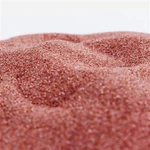
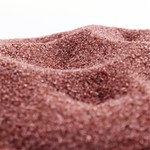
JIANGSU LM MINING CO., LTD. was incorporated in Lianyungang city, Jiangsu Province, China since 2007. It is a mining and production company responsible for natural mineral "Garnet" . Our jade garnet is available in 10-20 Mesh, 20-40 Mesh, 30-60 Mesh, and 80 Mesh sizes. Jade garnet is primarily used for jewelry, but is also used for crystal repair and decoration. It's made into various accessories, including rings, necklaces, and bracelets, and is used for emotional and physical well-being.

Why Choose Us?
Company Strength
We own 3 mines with a total reserve of 6 million tons of almandine ore. Our annual sales volume is 30,000 tons.
Production Market
Our ore is sold to more than 30 countries, including the United States, Canada, South Korea, Indonesia, the Middle East, Singapore, etc.
Quality Assurance
High quality is always our priority to satisfy customer's need. The finishing product meet the standard based on ISO11126 and ISO11127.
Exquisite Craftsmanship
As a specialist for garnet abrasive, we apply the gravity and magnetic concentration principle for processing by purifying, drying, steps of gravity and magnetic choosing.

Sillimanite occurs in three colored varieties: yellow, brown, and blue.
Yellow Sillimanite
The yellow color is characteristic of unaltered single crystals of sillimanite from high-grade metamorphic rocks and associated pegmatites. Such sillimanites contain up to 1.8 wt.% Fe2O3 and up to 0.3% Cr2O3. The yellow color is due to Fe3+, or in a few cases, to Cr3+.
Brown Sillimanite
The brown variety is also formed in high-grade metamorphic rocks and associated pegmatites; some brown sillimanite is chatoyant from abundant acicular inclusions oriented parallel to c. Brown sillimanite generally contains 1 or more wt.% Fe2O3. Optical absorption spectra of brown sillimanite include some of the iron features characteristic of yellow sillimanite and prominent bands at ~452 nm and 542 nm.
Blue Sillimanite
Blue sillimanite contains no more than 1 wt.% Fe2O3. The prominent absorption features, restricted to γ, consist of two bands at 595 and ~836 nm. The spectra are similar to those of blue kyanite. As with kyanite, it is likely that the coloration is the result of intervalence charge transfer although the intensity of the absorption bands is not correlated with either Fe or Ti content.
Parameters of Sillimanite

Mohs Hardness
With a score of 6.5-7.5, sillimanite is the epitome of durability and resilience.
Color Spectrum
From the colorless purity to shades of white, gray, yellow, brown, green, blue, and violet-blue, sillimanite offers a rainbow of options.
Crystal Structure
Its orthorhombic structure is a testament to its unique internal architecture.
Luster
Depending on the stone, it can shine with a vitreous, sub-vitreous, greasy, or silky glow.
Transparency
Sillimanite ranges from transparent to opaque, each with its own charm.
Refractive Index
With a range of 1.65-1.68, it interacts with light in mesmerizing ways.
Density
The density varies, reflecting the stone's form and structure.
Usage of Sillimanite
Sillimanite as a natural and untreated mineral is a very important raw material for high alumina refractories which are extensively used in Iron and steel, Petrochemical, Electrical, Cement, Zinc and Glass industries.
Sillimanite when heated above 1545℃ converts to Mullite and the excess silica as glass, crystoballite or tridyamite. The formation of the glassy phase can be reduced by addition of a small percentage of technical or calcined pure alumina fines (like - SRM 30 or HGRM 30 etc) which reacts with this excess silica to form mullite, which in turn help in enhancing the quality of the product.
Due to the very low expansion or contraction on heating, sillimanite need not be calcined before use. Unlike sillimanite from most of the sources in the World which are used as it is, the Rewa sillimanite, because of its impurities, should not be used as such. It is always better once to wash these lumps in the raw material yard itself and then after shifting to the Mill House and crushing, grinding pass through magnetic separator to eliminate the free iron impurities.
Sillimanite is very often pale colored – white, pale yellow or light gray. However, it also offers a variety of reds, greens, or yellows that appear iridescent, where the surface changes color depending on the angle at which it is viewed or illuminated.
The color strength itself is an artifact of its trichroic pleochroism, which it shares with the other two aluminosilicates.

Ordering Process
Buyer sends inquiry --> Buyer receives quotation --> Order confirmation --> Buyer sends deposit --> Seller prepares
Certificate

Payment Terms
L/C; T/T; Paypal; West Union; MoneyGram etc;
Sample order: 100% payment before shipment;
Bulk order: 50% deposit balance before shipment.
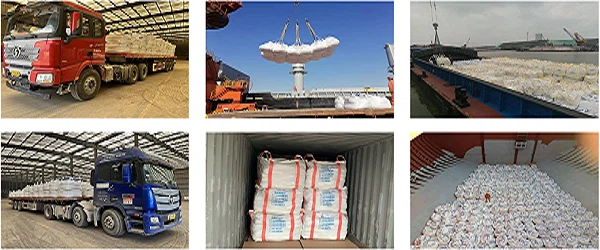
Packaging & Transportation