




Zircon Sand
Your Leading Zircon Sand Supplier
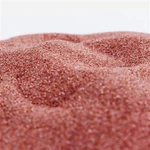
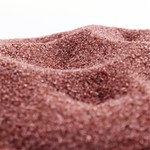
JIANGSU LM MINING CO., LTD. was incorporated in Lianyungang city, Jiangsu Province, China since 2007. It is a mining and production company responsible for natural mineral "Garnet" . Our jade garnet is available in 10-20 Mesh, 20-40 Mesh, 30-60 Mesh, and 80 Mesh sizes. Jade garnet is primarily used for jewelry, but is also used for crystal repair and decoration. It's made into various accessories, including rings, necklaces, and bracelets, and is used for emotional and physical well-being.

Why Choose Us?
Company Strength
We own 3 mines with a total reserve of 6 million tons of almandine ore. Our annual sales volume is 30,000 tons.
Production Market
Our ore is sold to more than 30 countries, including the United States, Canada, South Korea, Indonesia, the Middle East, Singapore, etc.
Quality Assurance
High quality is always our priority to satisfy customer's need. The finishing product meet the standard based on ISO11126 and ISO11127.
Exquisite Craftsmanship
As a specialist for garnet abrasive, we apply the gravity and magnetic concentration principle for processing by purifying, drying, steps of gravity and magnetic choosing.
Characteristic of Zircon Sand
Abrasive Nature
Zircon sand is highly abrasive, which can lead to equipment wear and abrasion-related challenges during handling and conveying.
Particle Size Distribution
It often consists of fine particles with irregular shapes, requiring specialized equipment for efficient handling without degradation or segregation.
Density
Zircon sand has a high density, which affects the flowability and transportability of the material.
Hygroscopicity
Zircon sand can absorb moisture from the atmosphere, affecting its flow properties and causing clumping or caking during storage and handling.
Parameters of Zircon Sand

Process for Zircon Sand
Mining
Zircon sand is extracted through open-pit mining or dredging from placer deposits, which are rich in heavy minerals.
Processing
The extracted sand is then processed to separate zircon from other minerals. This involves dry separation or flotation methods to isolate zircon crystals from the surrounding minerals.
Refinement
The purified zircon sand is often further refined to remove impurities and obtain a higher-quality product for industrial use.
Physical Properties of Zircon Sand
|
Specific Gravity |
4.5 – 4.7 |
|
Bulk Density |
2.8 Kg/Ltr. |
|
Angle of Repose |
28 – 32 deg |
|
Hardness (Moh’s) |
7.5 |
|
Specific Activity (calculated) U + Th |
3.75 Bq/g |
|
Purity |
98% min |
Chemical Properties of Zircon Sand
|
Content |
Value wt% |
|
ZrO2+HfO2 |
66.1-66.9 |
|
Fe2O3 |
0.04-0.07 |
|
TiO2 |
0.12-0.15 |
|
SiO2 |
32.3-32.7 |
|
Al2O3 |
0.35-0.60 |
|
P |
0.04-0.05 |
|
U |
220-260ppm |
|
Th |
140-220ppm |
|
Free Silica as Quartz |
< 0.05 |

Usage of Zircon Sand
Ceramics: Zircon sand is a crucial ingredient in ceramic glazes, providing strength, durability, and color stability to the finished product.
Refractories: Its high heat resistance makes zircon sand indispensable in manufacturing refractory bricks and linings for furnaces and kilns.
Foundry Casting: Zircon sand is used as a molding material in foundries for casting metal components due to its ability to withstand high temperatures and maintain shape integrity.
Chemical Processing: Zircon sand is employed in various chemical processes, including catalyst production and chemical synthesis.
Nuclear Industry: Its resistance to radiation and thermal shock makes zircon sand a valuable material in nuclear reactor construction and fuel rod assemblies.
Safe Using of Zircon Sand
Protective Equipment: Wear dust masks, gloves, and goggles when handling zircon sand to avoid inhalation of fine particles and direct contact with the skin and eyes.
Proper Ventilation: Ensure good ventilation in areas where zircon sand is processed or used to minimize the inhalation of dust.
Storage: Store zircon sand in sealed containers to prevent contamination and exposure to the elements.
Disposal: Follow proper waste disposal protocols to avoid environmental contamination from mining or processing byproducts.

Certificate

Payment Terms
L/C; T/T; Paypal; West Union; MoneyGram etc;
Sample order: 100% payment before shipment;
Bulk order: 50% deposit balance before shipment.
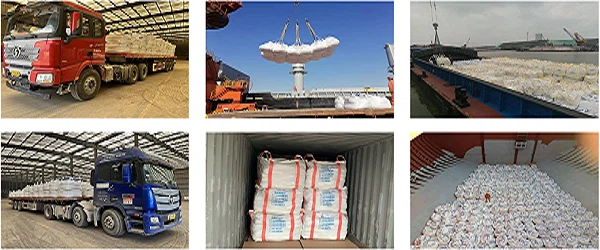
Packaging & Transportation