


Silica Sand
Your Leading Silica Sand Supplier
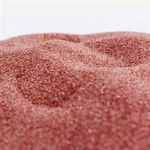
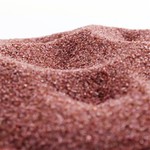
JIANGSU LM MINING CO., LTD. was incorporated in Lianyungang city, Jiangsu Province, China since 2007. It is a mining and production company responsible for natural mineral "Garnet" . Our jade garnet is available in 10-20 Mesh, 20-40 Mesh, 30-60 Mesh, and 80 Mesh sizes. Jade garnet is primarily used for jewelry, but is also used for crystal repair and decoration. It's made into various accessories, including rings, necklaces, and bracelets, and is used for emotional and physical well-being.


Why Choose Us?
Company Strength
We own 3 mines with a total reserve of 6 million tons of almandine ore. Our annual sales volume is 30,000 tons.
Production Market
Our ore is sold to more than 30 countries, including the United States, Canada, South Korea, Indonesia, the Middle East, Singapore, etc.
Quality Assurance
High quality is always our priority to satisfy customer's need. The finishing product meet the standard based on ISO11126 and ISO11127.
Exquisite Craftsmanship
As a specialist for garnet abrasive, we apply the gravity and magnetic concentration principle for processing by purifying, drying, steps of gravity and magnetic choosing.

Fused Silica
Themelted sand become amorphous silicon dioxide glassy ingot after being fused at high temperature (2000 -2300)'℃ and coolingWe further process the products into lump, grain and powder in accordance with customer's requirement.
White Pool Pebble
Silica sand is an important industrial mineral raw material, mainly made of quartz stone after crushing and processing.silica sand is a non-metallic mineral with hard, wear-resistant and chemically stable properties. i Quartz sand is usually milky or colorless translucent in color, with a Mohs hardness of 7.
Parameters of Silica Sand

Performances of Silica Sand
High Melting Point
Silica sand has a high melting point of around 1700°C (3092°F), making it suitable for high-temperature applications such as glassmaking and foundry casting.
Chemical Inertness
Silicon dioxide is chemically inert, meaning it does not react with most chemicals. This property makes silica sand an ideal choice for use in various chemical processes and as a filtration medium.
Low Thermal Expansion
The low thermal expansion coefficient of silica sand ensures that it maintains its shape and structural integrity even when subjected to temperature changes, which is crucial in manufacturing processes that involve heat.
High Permeability
The high permeability of silica sand allows it to facilitate fluid flow, making it valuable in applications like oil and gas recovery, water filtration, and construction.
Safe Storage Methods for Silica Sand
Keeping containers closed;
01
Storing in a dry and well-ventilated area;
02
Using dust collection systems;
03
Avoiding storage near incompatible chemicals;
04
Preventing accidental bursting or damage.
05
The chemical composition of silica sand determines its quality and suitability for industrial applications. High-purity silica sand typically contains 95–99% silicon dioxide (SiO₂). However, minor impurities can influence its properties. Common impurities include:
• Iron Oxides (Fe₂O₃): Affects color and transparency.
• Aluminum Oxide (Al₂O₃): Impacts thermal resistance.
• Calcium Oxide (CaO): Alters the sand's reactivity.
• Magnesium Oxide (MgO): Affects structural stability.
• Potassium Oxide (K₂O) and Sodium Oxide (Na₂O): Influence melting and fusion properties.

Application Scope of Silica Sand
Golf Courses & Sports Fields
Silica sand is used for bunkers and greens on golf courses, as well as for natural and synthetic sports fields. Those sand traps you find yourself stuck in way too often when you're playing eighteen are usually full of silica sand. It's also used to maintain greens and fairways because of its ability to support drainage and natural plant growth. For turf fields, silica sand is used as the main structural component of an uncontaminated filtration media.
Industrial Abrasives
Silica sand is commonly used as a mineral abrasive for industrial blasting. Though blasting with silica sand can create dangerous dust, exposure is easily avoided by following recommended PPE (personal protective equipment) guidelines and/or by coating the sand with solutions designed to control dust.
Water Filtration
One of the most common uses of silica sand is in water filtration, whether processing well water or filtering your tap water. Because of its uniform shape and size, silica sand is an effective filtration bed that consistently removes contaminants from water. Also, it does not degrade when exposed to acidic chemicals.
Glassmaking
Silica sand is a major ingredient in the production of glassmaking—in fact, silica is the primary component in standard glass products ranging from windows to beer bottles. The purity of the silica sand used plays a role in determining the color, strength and clarity of the final product.
Paints & Coatings
Silica sand is used in paints and coatings to improve the overall look and durability of the paint. Silica fillers improve paint's tint reduction and dirt resistance, and because of silica sand's oil-absorption properties it makes a durable coating that's rich in pigment and resistant to wear and tear.
Ceramics & Refractories
Silica is an important component in the construction and glazing of all types of ceramics including tableware, floor tiles, wall tiles, and more. Silica serves as the structural backbone of ceramic products helping to regulate expansion and shrinkage, ensuring ceramics dry properly, and improving the overall durability of the ceramic items.
Construction Materials
Silica sand (often called industrial sand when used for this purpose) is the main structural component in a number of construction products. Flooring, mortars, cement, roofing shingles, asphalt, and other industrial materials all use silica to improve durability and structural integrity. As silica is resistant to weather, wear and corrosion, it is often used as a caulk or sealant.
Safe to Using Silica Sand
• Ensure that all engineering controls are working properly before using.
• Use wet methods that apply water to dusty areas.
• Use local exhaust ventilation where work is dusty.
• Use enclosures, when available, to isolate work processes.
• Consider combining water and ventilation controls.
• Replace water and air filters when needed or per manufacturer's instructions.
• Avoid dry sweeping or using compressed air during housekeeping procedures.
Certificate

Payment Terms
L/C; T/T; Paypal; West Union; MoneyGram etc;
Sample order: 100% payment before shipment;
Bulk order: 50% deposit balance before shipment.
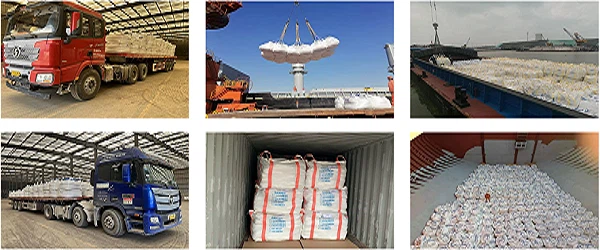
Packaging & Transportation