


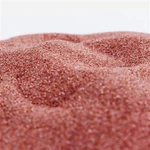

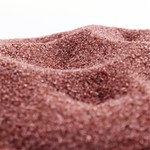


Kyanite
JIANGSU LM MINING CO., LTD. was incorporated in Lianyungang city, Jiangsu Province, China since 2007. It is a mining and production company responsible for natural mineral "Garnet" . Our exporting products include Rock Garnet Abrasive, Alluvial Sea/Alluvial Garnet Abrasive, Blasting Garnet Abrasive, Waterjet Cutting Garnet, Water Filtration Garnet, Polishing Garnet and Wear-resistant Flooring Garnet. Waterjet cutting garnet is a mineral used, thanks to its characteristics, in many cleaning and sandblasting processes. Chemically inert, free of toxic substances, it is not radioactive nor carcinogenic and it is extremely resistant.


Why Choose Us?
Company Strength
We own 3 mines with a total reserve of 6 million tons of almandine ore. Our annual sales volume is 30,000 tons.
Production Market
Our ore is sold to more than 30 countries, including the United States, Canada, South Korea, Indonesia, the Middle East, Singapore, etc.
Quality Assurance
High quality is always our priority to satisfy customer's need. The finishing product meet the standard based on ISO11126 and ISO11127.
Exquisite Craftsmanship
As a specialist for garnet abrasive, we apply the gravity and magnetic concentration principle for processing by purifying, drying, steps of gravity and magnetic choosing.
Types of Kyanite
Kyanite Sand
Kyanite is a new type of refractory material, which belongs to the minerals with high alumina content. It has strong chemical corrosion resistance, high mechanical thermal shock strength and irreversible thermal expansion. The main raw material for stone bricks and low creep.
Kyanite Powder
Kyanite is a new type of refractory material, which belongs to the minerals with high alumina content. It has strong chemical corrosion resistance, high mechanical thermal shock strength and irreversible thermal expansion. The main raw material for stone bricks and low creep bricks.

Specifications of Kyanite

Process Characteristics of Kyanite
Thermal expansibility: The kyanite mineral is converted into a mixture of mullite and kyanite during heating. During this transformation process, the mineral expands with volume and forms a good quartzite needle-like network with volume expansion rate of 16-18%.
Stability: The stability of kyanite refractories is 1.5 times higher than that of clay refractories. The loss of kyanite refractory brick is 43% lower than that of clay brick, and its life span is 150-200 furnaces longer than that of clay brick.
High refractoriness: General clay refractory refractoriness is 1670-1770 deG C, and the refractory of kyanite is usually greater than 1790 DEG C, the highest is greater than 1850 DEG C.
Irreversibility: Calcination of kyanite into mullite is an irreversible transformation. It is stable below the temperature of 1810℃. Therefore, mullite refractories have the characteristics of stable volume at high temperature, low expansion rate, strong chemical corrosion resistance, high mechanical strength and strong thermal impact resistance.
Chemical Properties of Kyanite
|
Composition |
Al2O3.SiO3 |
|
Melting Point |
3290 C |
|
Density |
3.56-3.67 g/ml |
|
Refractive Index |
1.71; 1.72; 1.73 |
|
Birefringence |
0.012 - 0.017 |
Usage of Kyanite
Kyanite is a refractory material, normally used in granular form (or granular/powder mix). The grains have relatively low thermal expansion so their presence in a material imparts resistance to thermal shock.
Kyanite is widely employed in insulating brick, kiln furniture, refractory shapes, crucibles, etc. and in porcelain, tile bodies, and casting mixes. The material reduces fired shrinkage, increases mechanical strength and thermal shock resistance and allows products to be made with thinner walls, better resistance to dunting, deformation and chipping.
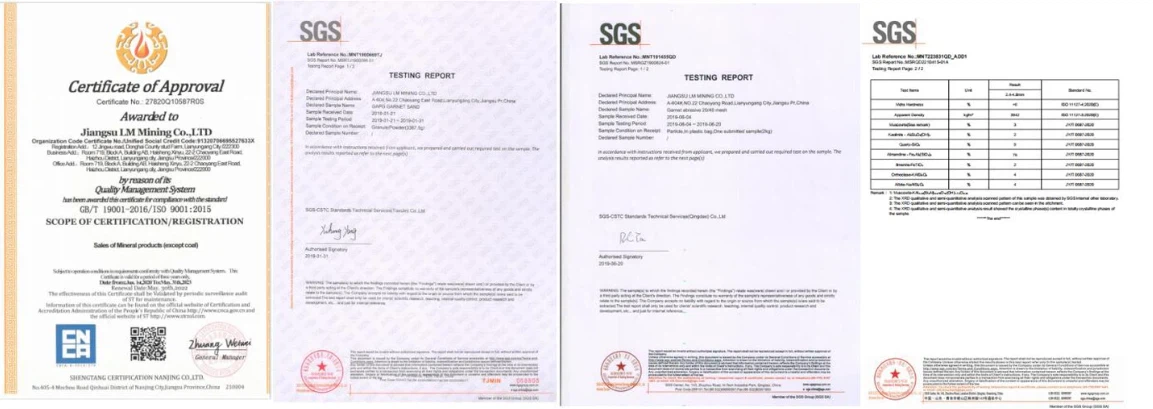
Certificate
Packaging

Transportation
